Footwork & breakfalls
Breakfalls, footwork and natural movement form the foundation.
 BUJINKANDOJO FOLLO
JAPANESE MARTIAL ARTS IN DRØBAK
Practise together. Space to learn.
Bujinkan Budō Taijutsu at Sogsti school.
Mondays from 19:00.
01 IN TRAINING
We practise breakfalls, footwork and techniques
with a training partner.
Budō Taijutsu involves using the whole body. Through agreed exercises, we explore grips, strikes, throws and control. Distance, timing and balance become things we can practise together.
Breakfalls, footwork and natural movement form the foundation.
We practise techniques together and explore how they change with distance and movement.
Japanese martial arts traditions with techniques practised both with and without training weapons.
BEFORE YOU COME
You do not need to know the name of a single technique to get in touch.
Ask MikaelYes. Both newcomers and experienced practitioners are welcome to get to know the training. Tell Mikael you are new when you arrive.
Mondays from 19:00 at Sogsti school in Drøbak. The school’s address is Ekesvingen 30, 1446 Drøbak. Ask Mikael about the correct entrance and any changes during holidays.
We practise Bujinkan as a martial art, focusing on technique and partner exercises. Training is not geared towards competition.
Contact Mikael about the current age limit, what to bring for your first visit and the terms for membership or trial training.
Send an emailBUJINKAN DOJO FOLLO
Would you like to train in Japanese martial arts?
Come to Sogsti school on Mondays from 19:00.
Mondays
From 19:00
Sogsti school
Ekesvingen 30, 1446 Drøbak
FOLLOW YOUR CURIOSITY
Explore at your own pace. Each entry leads to short explanations, further reading and sources.
02 THE ART WE PRACTISE
Bujinkan Budō Taijutsu brings together nine Japanese martial arts traditions.
Bujinkan was founded by Masaaki Hatsumi, who learned the traditions from his teacher Toshitsugu Takamatsu. The art includes breakfalls, strikes, kicks, throws, control techniques and traditional weapons.
We study techniques and principles through exercises with a partner. Self-defence is part of the field, alongside body technique, weapons practice and historical traditions.
History and the nine schools Bujinkan’s official websiteOUR NAME
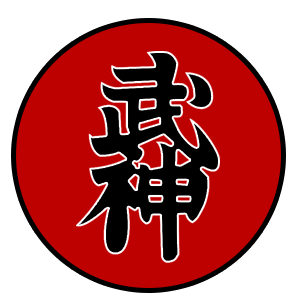
武神館 is often interpreted as “Hall of the Divine Warrior”. Hatsumi chose the name in honour of his teacher, Toshitsugu Takamatsu.
神 is also read as shin or kami, and appears in the name Shintō (神道). These characters have several meanings; the translation above is a common interpretation of the name as a whole.